
Agriculture vs. Farming: Are They Really the Same? Let’s Dig InWhen you hear the words “agriculture” and “farming,” do they seem like interchangeable terms? Most people would agree, but a deeper dive reveals some surprising nuances. You see, while they are closely linked, they aren’t identical. Let’s dig into the subtle yet important differences.
What’s the Big Deal?
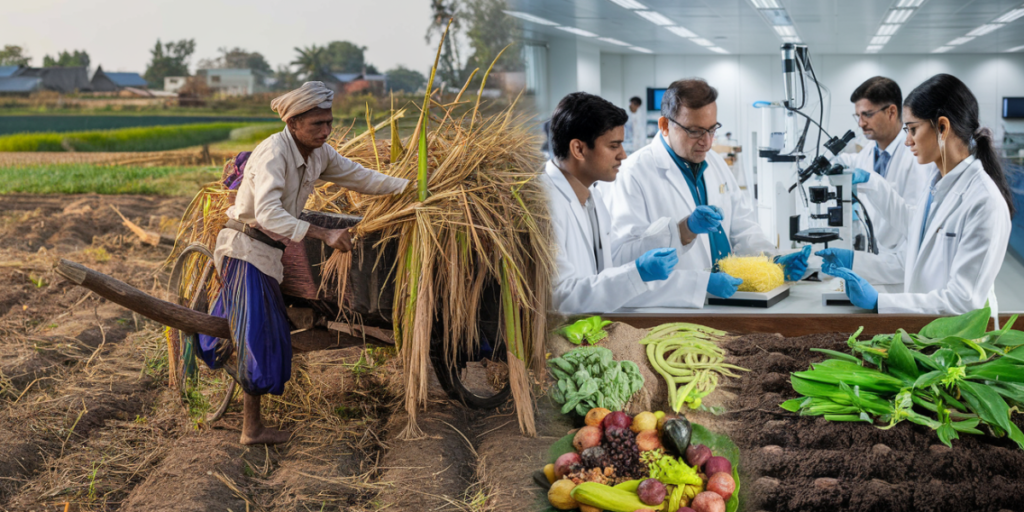
Let’s start with the basics. Agriculture is a broad term, like the umbrella of everything that grows—crops, animals, and even the research behind making them grow. Farming, however, is a more specific subset of agriculture. It’s about growing those crops and raising those animals. It’s the “hands-on” bit of the process.
Imagine you’re in a field, harvesting some wheat. That’s farming. But if you’re working on improving crop yields or studying soil health, you’re venturing into agriculture. So, yeah, farming is part of the big agricultural picture—but agriculture is so much more.
From Plowing to Planting: The Farming Focus
Let’s be real: when most people think of farming, they picture tractors, barns, and dirt under fingernails. It’s a romantic image (or maybe just dirty), but it’s true. Farming often refers specifically to the act of growing crops or raising livestock.
Consider the traditional family farm: my uncle, for instance, spent years growing corn in Iowa. He wasn’t running large-scale research projects on crop genetics or anything like that. He was a farmer, plain and simple. The emphasis here is on production.
Farming’s core is practical. It’s all about turning soil into something tangible—food, fiber, or fuel. It’s also where those “agriculture” concepts—like water management or crop rotation—become everyday, often sweaty, decisions.
Agriculture: A World of Wonder and Complexity
Agriculture isn’t just about planting seeds and hoping for rain. It involves research, machinery innovation, climate science, and even economics. In fact, many agricultural jobs don’t even involve stepping into a field. It’s everything from developing new crop strains to analyzing soil samples or advising on policy to sustain the industry long-term.
Let’s zoom out. Think about organic farming. It’s not just about the farming practices—there’s a whole sector of agriculture that focuses on sustainable practices, environmental impact, and market development. My cousin once worked with a company developing new methods of organic pest control, and she would spend days in the lab, testing out oils and natural predators for crops. That’s agriculture—but not farming.
Agriculture vs. Farming: A Global Comparison
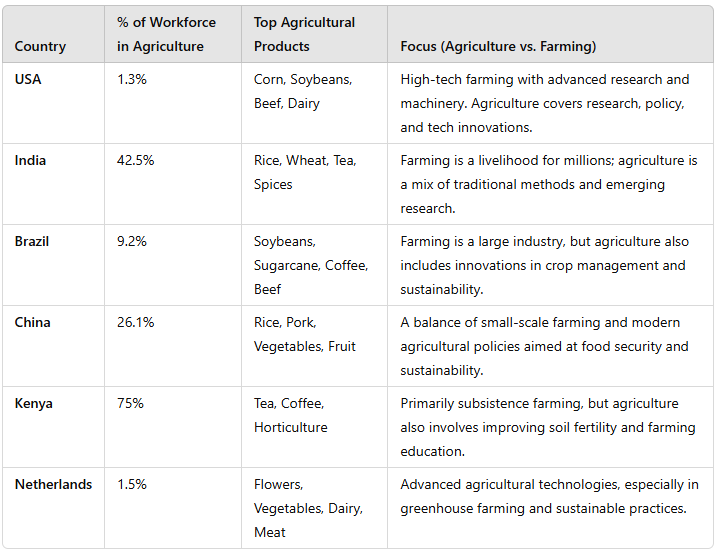
Now that we’ve explored the U.S. perspective, let’s broaden our scope and see how farming and agriculture differ in other countries. After all, what works in Iowa might not work in India or Brazil. The global farming and agriculture picture is diverse, and the distinctions between the two can be even more significant in different regions.
So, What’s the Verdict?
Are agriculture and farming the same thing? Well… no. But, here’s where it gets tricky: They’re two sides of the same coin. Without agriculture, there would be no farming. Without farming, agriculture wouldn’t be as relevant. It’s a symbiotic relationship.
Think of it this way: agriculture is the science and the system; farming is the labor and execution. The two are inextricably linked, but one is a broader concept than the other.
An Imperfect Pair
Sometimes, these terms can blur, don’t you think? You could find a person who is passionate about farming, but also deeply involved in agricultural research or policy—making it hard to pinpoint where “farming” ends and “agriculture” begins. And that’s okay. The lines aren’t always crisp, and honestly, that’s part of what makes both fields so interesting.
Take the Netherlands, for example. The country is one of the largest exporters of agricultural products despite having limited farmland. This success doesn’t come just from farming; it’s about agricultural technology and efficiency. Yet, in rural Kenya, farming is still about subsistence and surviving the seasons, with agriculture focusing on improving crop yields and pest management. The distinction here is stark.
Reflection Time: What Do You Think?
So, after all that, what’s your take? Does the distinction matter to you? If you’re a farmer, maybe agriculture feels too academic. If you’re in agricultural science, perhaps farming feels too… rustic. But that’s what’s so cool about it. These terms speak to different aspects of an incredibly complex and interconnected system that sustains life itself.
And as for me, I’ll keep waving the flag for both. Whether it’s in the field, in a lab, or in a government office, we’re all part of the same cycle. But, hey, who’s really right? Maybe we all are.