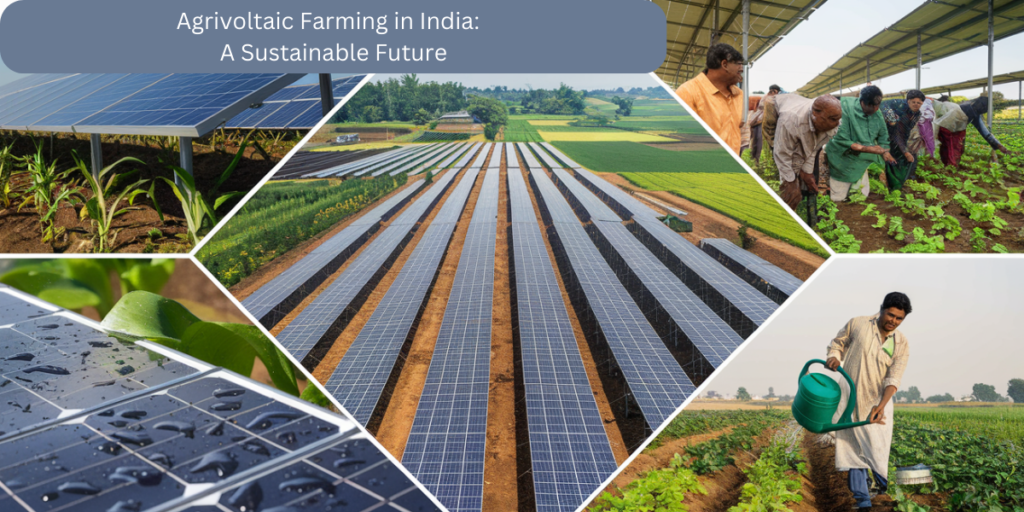

It’s easy to imagine India as a land of endless sun, vast agricultural fields, and somehow an overwhelming number of solar panels sprouting up like wildflowers. But what if I told you these two seemingly separate worlds—agriculture and solar power—are now colliding in a beautiful, if not slightly perplexing, way? This, my friends, is the promise of agrivoltaic farming in India.
Is it the magic bullet we’ve been waiting for, or is it just another idea that sounds better in theory? Let’s dive into the bright (pun intended) and not-so-bright side of this trend, shall we?
What Is Agrivoltaic Farming? A Quick Introduction
Agrivoltaics is exactly what it sounds like: combining solar power generation with farming. Imagine solar panels perched on tall stilts, letting crops thrive beneath them while also soaking up the sun’s rays to generate electricity. It’s like two birds with one stone—or maybe more accurately, it’s like two crops with one field!
But how is this working in India? Let’s be real here: it’s a bit of a challenge. We have the sun (hello, scorching heat), we have the land (kind of crowded, though), and we have the need (serious food security and energy crisis). So, the potential is massive. But can agrivoltaic farming really live up to its promise?
Why Is Agrivoltaic Farming Crucial in India?
Let’s step back a second and think about India’s situation. On the one hand, we’ve got an agriculture sector that’s facing every climate challenge you can imagine. Droughts, heatwaves, floods. You name it. On the other, we’re among the world’s largest consumers of energy, much of it coming from fossil fuels.
And then there’s the land. About 60% of India’s population depends on agriculture, but the land per person is shrinking. So what do we do?
Enter agrivoltaics.
In Gujarat, India’s first large-scale agrivoltaic project was launched in 2019 in the village of Modhera, a place that faces sweltering heat most of the year. Farmers there had their crops covered with solar panels that weren’t just providing shade but also helping the grid by generating power.
But here’s the thing: while the project generated over 5 MW of power, the real game-changer was the 5-10% increase in crop yield due to reduced heat stress and water conservation. Let’s face it, it wasn’t just an environmental win—it was an economic one too.
Stats You Need to Know: The Numbers Don’t Lie
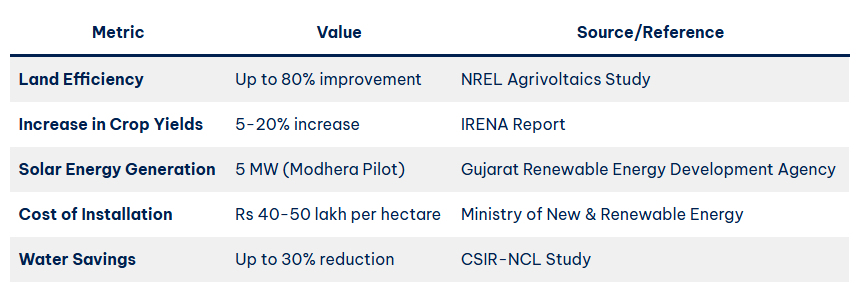
- Land Efficiency: Agrivoltaic systems can boost land efficiency by up to 80%, allowing for both food and energy production on the same piece of land. (Source: NREL Study)
- Increased Crop Yields: Crops like tomatoes and cucumbers have shown up to 20% higher yields when grown under solar panels due to reduced evaporation and shading.
- Energy Generation: India’s solar power potential is huge. A well-implemented agrivoltaic system could potentially generate 20 GW of solar energy by 2030.
The Success Story of Gujarat: A Ray of Hope
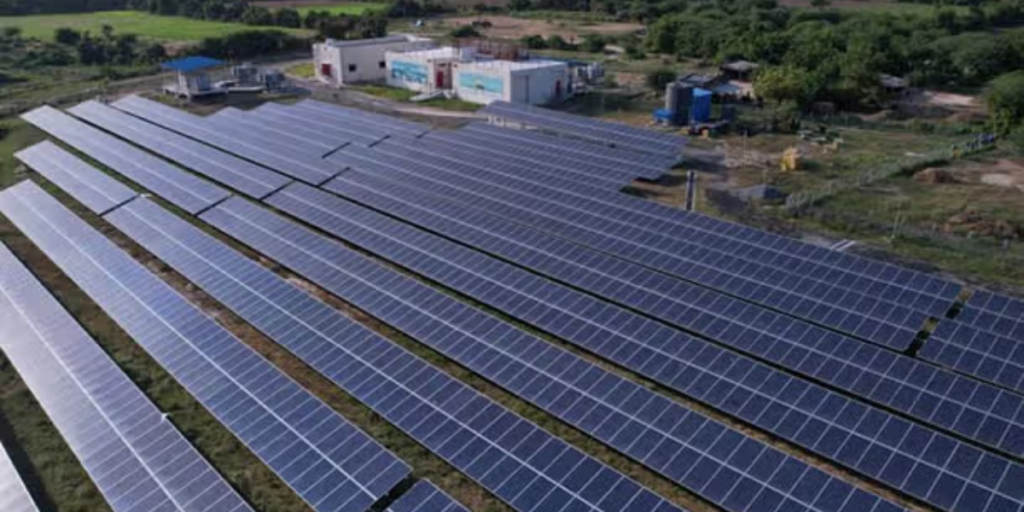
In Gujarat, the Modhera village pilot project might seem small in the grand scheme of things, but it’s a shining example of what’s possible when we combine technology with tradition. Farmers here had long struggled with increasing temperatures, and typical solar farms were of little use on agricultural land. The solution? Solar panels placed above crops, giving them shelter from the sun’s intense rays.
It wasn’t easy. The installation was costly, but with government subsidies, farmers have been able to see real results. Modhera’s agrivoltaic project has not only provided additional income from solar energy but has also made the crops underneath more resilient. It’s a win-win, right?
Gujarat Agrivoltaic Stats:
- Solar energy capacity generated: 5 MW
- Increase in crop yield: 5-10%
- Area covered: 100 acres of farmland
Challenges: Not Everything Is as Perfect as It Seems
Now, here’s where the rose-tinted glasses come off. Agrivoltaics sounds dreamy, but it’s not all sunshine and solar panels. There are challenges, and they’re real.
First, the cost. Implementing agrivoltaic systems is expensive. While India’s government offers some subsidies and incentives, the initial investment remains high for farmers, especially small-scale ones. It’s a financial leap for many.
Second, there’s the issue of technology and adaptation. Not all crops thrive under the partial shade provided by solar panels, and each farm will need to tailor its system to the local conditions. For instance, heat-loving crops like sugarcane may not respond as well to being shaded, whereas crops like chilies or spinach thrive in cooler conditions. But the technology is evolving—slowly but surely.
Key Metrics and Success Metrics for Agrivoltaics in India
It’s not all doom and gloom, though. Agrivoltaic farming has seen some major successes, and the metrics are enough to make you optimistic about the future.
Challenges and Roadblocks: Why It’s Not a Smooth Ride
- High Initial Costs: Farmers are already under financial pressure. Adding agrivoltaic systems means hefty upfront costs, even though the long-term benefits might outweigh them. The problem? Most smallholder farmers can’t afford the high installation costs without subsidies or loans.
- Climate Sensitivity: Not every crop works well with solar panel shade. The delicate balance between the right amount of sun and shade can be tricky. Farmers need specialized knowledge about crop behavior and the technology involved.
- Grid Integration Issues: In rural India, integrating solar power into the grid can be a logistical nightmare. The grid infrastructure isn’t always up to the task, and the energy produced in remote areas doesn’t always reach urban centers.
FAQ: Let’s Clear Things Up
Q1: Is agrivoltaics only useful for large-scale farms?
Not necessarily! While large farms benefit from economies of scale, even smallholders can take advantage of agrivoltaic systems, especially with the right support from the government or NGOs. A small pilot project can yield significant results.
Q2: How much will agrivoltaics save in water costs?
Agrivoltaic systems can reduce water evaporation by as much as 30%, which is huge for areas that are drought-prone or facing water scarcity, like many regions in India.
Q3: Does agrivoltaic farming work with all types of crops?
Nope! Some crops, like those requiring full sun, might struggle in shaded conditions. However, crops like chili peppers, tomatoes, and leafy greens do well under the partial shade of solar panels.
Q4: How long will it take to see a return on investment?
Typically, farmers can expect to see ROI within 5-7 years, depending on energy prices, crop yields, and the local climate. However, subsidies and incentives can shorten this time frame.
Final Thoughts: Is Agrivoltaics the Future of Indian Farming?
So, is agrivoltaics the next big thing for Indian agriculture, or just another trendy solution? Honestly, it’s somewhere in the middle. While the potential is massive—improving both food security and energy production—it’s not a one-size-fits-all solution. The technology is still evolving, and we need more research, better infrastructure, and government backing.
But hey, if Modhera can do it, why can’t every village in India? The dream of combining food and energy is closer than ever. It’s just a matter of how much patience we have as this story unfolds.
So, what’s your take on it? Ready to shine under the solar panels, or still skeptical?
External Links:
- IRENA Report on Agrivoltaics
- Ministry of New & Renewable Energy
- Gujarat Renewable Energy Development Agency
- CSIR-NCL Agrivoltaic Study