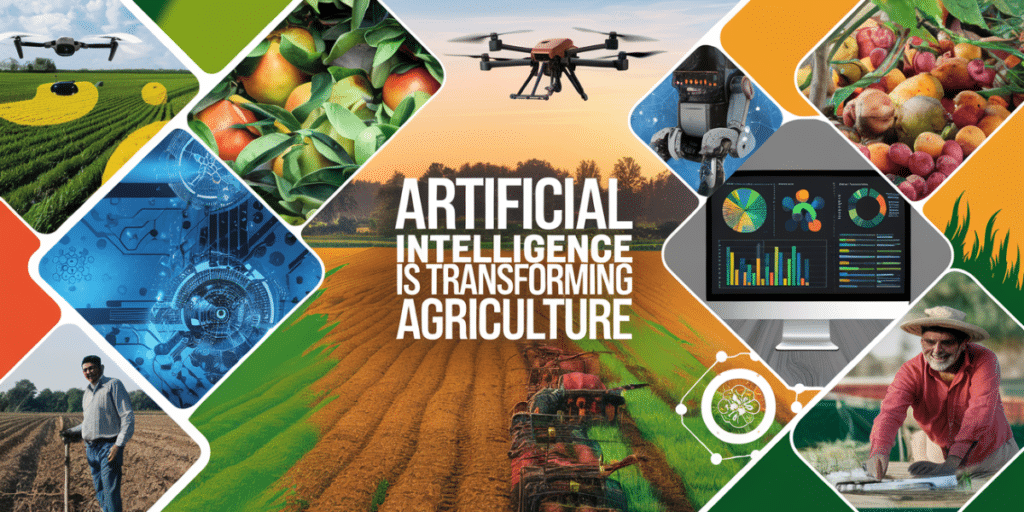

Agriculture has been around for centuries. But today, it’s on the verge of a technological revolution, thanks to Artificial Intelligence (AI). As farmers face new challenges, like climate change, population growth, and a shrinking workforce, AI offers solutions that are as smart as they are futuristic. From robotic tractors to AI-driven pest management, this isn’t your grandfather’s farm anymore.
Let’s dive into how AI is reshaping the future of farming, one algorithm at a time.
AI-Powered Precision Farming: It’s All About the Data
Imagine you’re a farmer, staring out at a vast field of crops. The sun is setting, and you’re wondering, “Is this field getting enough water? Is there a pest lurking in the corner?” Well, AI can give you the answer in real-time—without the need for a psychic medium or a crop divining rod.
AI in Precision Agriculture helps farmers monitor crops, soil, and the environment with pinpoint accuracy. Smart sensors can measure things like soil moisture, nutrient levels, and weather patterns. Think of it as the Fitbit for your plants. According to Agriculture and Food Security Journal, precision farming has led to a 15-25% increase in crop yields (source: Agriculture and Food Security Journal).
But it’s not just about sensors. AI-driven tools like John Deere’s See & Spray use machine learning to identify weeds in real-time, spraying herbicide only where needed. This reduces chemical use and helps the planet breathe easier. And you can say goodbye to that scary, back-breaking weeding work.
Smart Robots: A Farmer’s New Best Friend (Sort of)
Remember the day you tried to get your lawnmower to trim the edges of your yard, only to realize it was about as useful as a wet sock? Well, AI-powered farm robots like Octinion’s Rubion are here to change the game—except they actually work. Rubion can pick strawberries better than most humans, thanks to computer vision and deep learning algorithms that detect ripeness. It might not win any beauty contests, but it’ll out-pick your grandmother’s garden any day.
AI robots in agriculture are becoming more popular, with companies like FFRobotics developing fruit-picking robots that can harvest apples, peaches, and even grapes. These robots use AI to determine the optimal harvesting time and the most efficient picking technique, cutting down on food waste and labor costs.
And we’re not just talking about robots in the fields. Even tractors are getting a makeover. Kubota now offers AI-powered smart tractors that steer themselves. No need for human intervention, just the occasional coffee break for the farmer, who can monitor progress from a distance. Farmers who use this tech report up to 30% increased efficiency (source: Kubota).
AI’s Role in Crop Health: The Ultimate Plant Doctor
In a perfect world, every crop would thrive without diseases or pests, and farmers would have time to sip iced tea. But alas, the real world is filled with creepy crawlies, fungi, and unpredictable weather. Here’s where AI steps in, acting as the ultimate plant doctor.
AI-powered systems like IBM’s Watson Decision Platform for Agriculture analyze data from sensors, satellite images, and weather reports to detect early signs of crop diseases or pest infestations. By predicting outbreaks before they happen, AI allows farmers to treat their crops precisely where needed, saving both time and money. According to a report from McKinsey, AI-based crop disease detection can reduce pesticide use by 20-30%, helping to keep crops healthier and the environment cleaner (source: McKinsey & Company).
But hold up—are we sure AI can replace old-school methods, like the gut instinct of a seasoned farmer? AI has its limitations, especially in unpredictable situations. Nature has a way of throwing curveballs, and AI can sometimes miss those nuances. For example, AI systems in pest control have difficulty accounting for “outlier” conditions—like the random squirrel that decides to ruin your cornfield. You know, just for kicks.
AI in Livestock Farming: Smart Cows, Smart World
Now let’s talk about the moo in the room: livestock. AI isn’t just for crops; it’s also helping farmers manage livestock in ways that are almost sci-fi. For instance, AI-driven systems like Agersens’ eShepherd use collars with GPS tracking and sensors to monitor animal movement and health. It even helps keep livestock within designated grazing areas, reducing the need for fences. Imagine a cow that knows exactly where it’s supposed to be. It’s like a GPS-enabled dog collar for cows, but much cooler.
Even smart wearables for cows are a thing. Yes, really. Companies like Fitbit for Cows (seriously, that’s the name) use AI to monitor the health and behavior of livestock, alerting farmers to potential issues, like illness or stress, before they escalate. This can save farmers money by catching problems early.
The Environmental Impact: AI as Earth’s New Superhero
Okay, we get it—AI’s cool, but what about the environment? Isn’t technology just another way to destroy the planet? Surprisingly, AI is actually helping farmers reduce their environmental footprint.
AI for Sustainable Farming has a massive role to play in making agriculture greener. AI algorithms can optimize irrigation systems, ensuring that crops get exactly the water they need and no more. In places like California, where water is scarce, this technology is crucial in conserving water resources. In fact, AI-powered irrigation can reduce water usage by 20-40% (source: AI in Agriculture).
Also, by improving crop yield predictions and reducing waste, AI helps minimize the carbon footprint of food production. But let’s not get too carried away—AI’s energy consumption can be quite hefty, especially in data-heavy farming applications. The balance between efficiency and environmental impact is still a work in progress.
A Farm of the Future (Or Not?)
So, will AI completely replace farmers? Probably not. AI is amazing, but it’s still a tool—just like a plow or a harvester. There’s something deeply human about farming. Maybe it’s the tradition. Maybe it’s the connection to the land. Either way, AI can assist, but the heart of farming remains rooted in human intuition and effort.
Still, imagine a future where farmers are more like scientists, overseeing fleets of robots, monitoring crops through drones, and making data-driven decisions. Could it be a utopia or a dystopia? Only time will tell. One thing’s for sure, though: we’re moving toward a hybrid world where humans and machines work together, rather than against each other. Let’s just hope we don’t end up with a robot uprising in the fields.
FAQs
1. How does AI improve crop yields?
AI analyzes data to optimize irrigation, detect diseases early, and manage nutrients more effectively. The result is healthier crops and better yields. Farmers report a 15-25% increase in crop yield with AI-based systems.
2. Can AI really replace farm workers?
Not entirely. While AI helps with tasks like weeding, planting, and harvesting, the human touch is still essential for managing the land, making decisions, and responding to unexpected challenges.
3. What is AI’s role in reducing pesticide use?
AI can detect pests and diseases early, allowing for targeted treatments. This reduces the need for blanket pesticide applications, leading to lower costs and less environmental impact.
4. Are AI robots safe for the environment?
While AI can reduce pesticide use and conserve water, robots themselves consume energy. As AI technology evolves, balancing its efficiency with energy consumption will be key for sustainability.