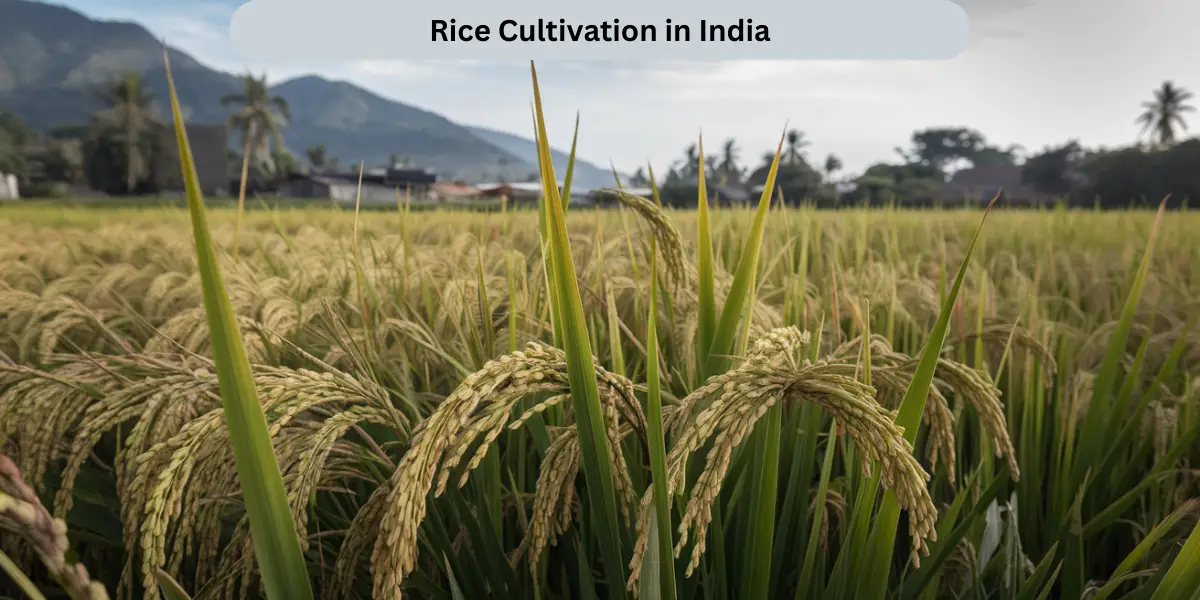

Rice is the staple food for over half of the global population, and in India, it plays an indispensable role in the economy, culture, and daily life of millions. Rice cultivation in India spans vast regions, employing millions of farmers and contributing significantly to both national and global food security. With a diverse climatic landscape, India grows a variety of rice types, each suited to specific regions and seasonal conditions.
- About Rice
- Types of Rice
- Key Metrics of Rice Types and Regions
- Crop Season of Rice
- Climatic Conditions for the Growth of Rice
- Soil Condition for Growth of Rice
- Labour Requirement for Growth of Rice
- Methods of Rice Cultivation
- Production and Productivity of Rice in India
- Trade in Rice
- System of Rice Intensification (SRI)
- Direct Seeding of Rice
- Export Rice from India
- Export Comparison: India vs Other Countries (2024)
- Frequently Asked Questions (FAQs)
About Rice
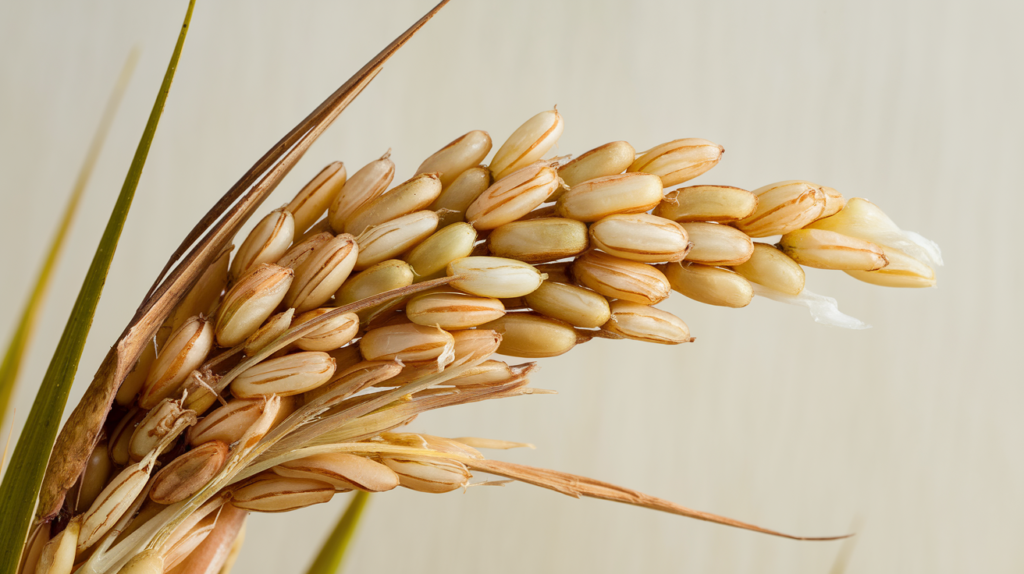
Rice is a cereal grain primarily grown for its edible starchy seeds, which are a fundamental part of diets worldwide. It is a crucial crop in India, grown on around 44 million hectares, making it one of the world’s largest producers and consumers of rice. India contributes nearly 20% of global rice production, and the crop is central to the agricultural economy, supporting the livelihoods of millions of farmers.
Types of Rice
India cultivates a wide variety of rice, suited to different climatic conditions, soil types, and consumer preferences. These varieties can be broadly classified into the following categories:
- Indica Rice
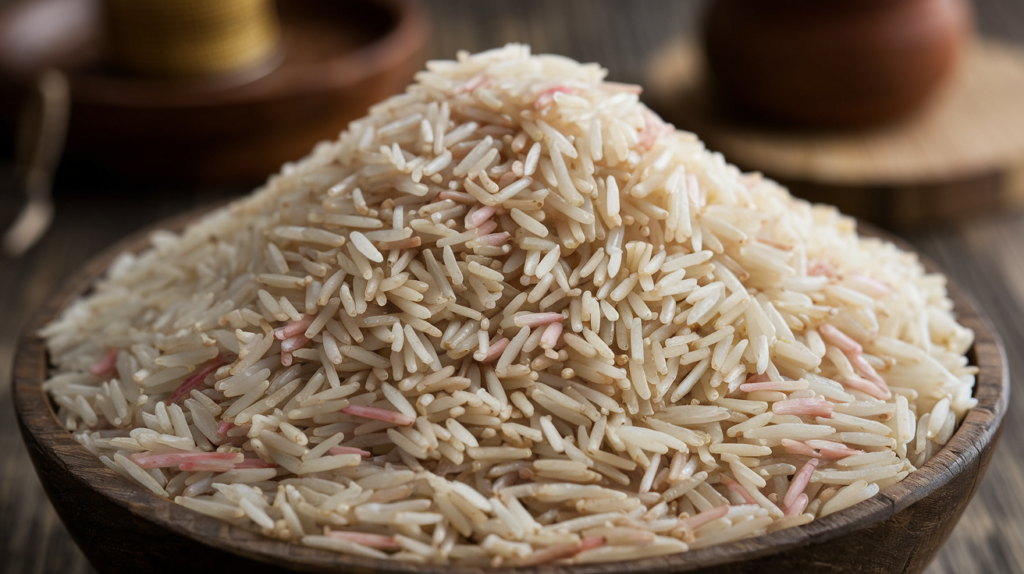
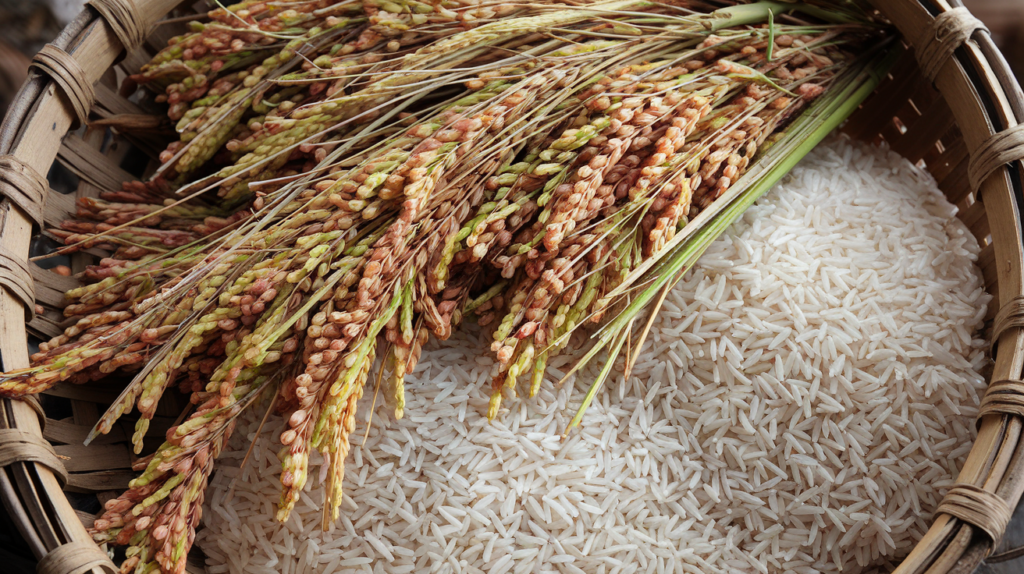
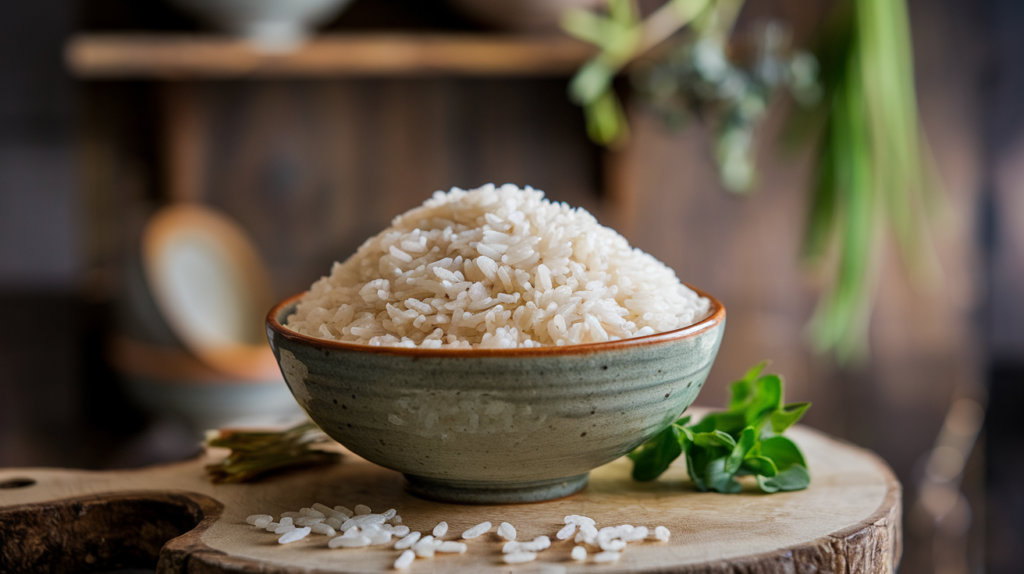
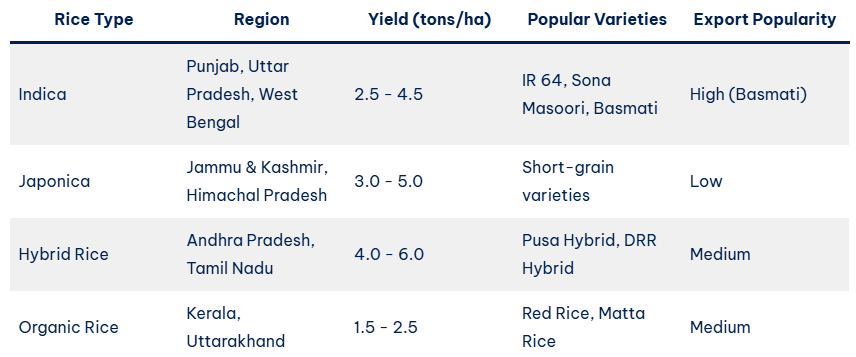
Predominantly grown in tropical regions, such as the eastern and southern parts of India, Indica rice includes varieties like Basmati, Sona Masoori, and IR 64. Known for its long grain and aromatic quality, Basmati rice is especially popular for export. - Japonica Rice
Grown mainly in the temperate zones, Japonica rice has shorter grains and a stickier texture. This variety is more common in cooler regions like Jammu and Kashmir, Himachal Pradesh, and parts of Uttar Pradesh. - Hybrid Rice
These are high-yielding varieties developed through cross-breeding of two distinct rice varieties. Hybrid rice varieties like Pusa Hybrid and Dr. S. P. Boro are known for their resistance to pests and diseases and their ability to withstand varying climatic conditions. - Organic Rice
Increasingly popular due to the demand for organic products, organic rice is grown without synthetic fertilizers or pesticides, ensuring sustainability and a premium price.
Key Metrics of Rice Types and Regions
Crop Season of Rice
Rice is generally cultivated during two main cropping seasons in India:
- Kharif Season (Monsoon Crop)
The Kharif season starts with the onset of the monsoon in June and ends in October. This is the most significant rice-growing season, particularly for varieties like Basmati and Sona Masoori. The Kharif season requires a consistent rainfall pattern, making it ideal for flood-irrigated systems like those in Punjab and West Bengal. - Rabi Season (Winter Crop)
The Rabi season is planted in November and harvested in March. Although not as widespread as Kharif rice, Rabi rice is grown in areas with access to irrigation systems, such as parts of Haryana, Uttar Pradesh, and Andhra Pradesh. - Zaid Season
A third, lesser-known season, Zaid rice is grown during the summer months between March and June in areas with sufficient water resources.
Climatic Conditions for the Growth of Rice
Rice is a tropical plant that requires a warm, humid climate. The ideal temperature range for its growth is 25°C to 35°C. Rice cultivation thrives best in areas with:
- Annual Rainfall: Around 1,000 mm to 2,500 mm of rainfall, especially during the Kharif season.
- Temperature: Warm, with day temperatures averaging 30°C to 32°C and nighttime temperatures not dropping below 20°C.
- Humidity: High humidity is essential, which is why rice fields are often submerged in water to maintain an optimal microclimate for growth.
Rice farming is predominantly concentrated in the Eastern, Southern, and Northeastern regions of India, which have abundant water resources and favorable weather conditions.
Soil Condition for Growth of Rice
Rice requires alluvial, clayey, and loamy soils, which retain moisture efficiently. The key characteristics of ideal rice-growing soils include:
- Good water retention: Rice paddies are often flooded to a depth of 5-10 cm during cultivation.
- Neutral to slightly acidic pH (5.5 to 7.0).
- Fertility: Rice requires a high level of nutrients like nitrogen, phosphorus, and potassium, often supplemented through organic or chemical fertilizers.
Regions such as Punjab, Bihar, and West Bengal have soil conditions that support optimal rice cultivation.
Labour Requirement for Growth of Rice
Rice cultivation is highly labor-intensive, requiring numerous activities such as:
- Land Preparation (plowing, levelling, and puddling)
- Transplanting of seedlings (in flooded fields)
- Weeding and Fertilization
- Harvesting and Post-Harvest Processing
Labor requirements peak during the transplanting and harvesting phases, and due to its water-intensive nature, rice farming often requires an abundant local workforce.
Methods of Rice Cultivation
There are several methods of rice cultivation in India:
- Traditional Method (Transplanting):
This is the most common method, where seedlings are grown in nurseries and then transplanted into flooded fields. This method is labor-intensive but ensures higher yields and better weed control. - Direct Seeding:
In this method, rice seeds are sown directly into the field, which reduces labor costs but can result in lower yields and more weed problems. - System of Rice Intensification (SRI):
A more modern approach that involves planting fewer seedlings, wider spacing, and the use of organic fertilizers. This method can improve water-use efficiency and increase yield per unit area.
Production and Productivity of Rice in India
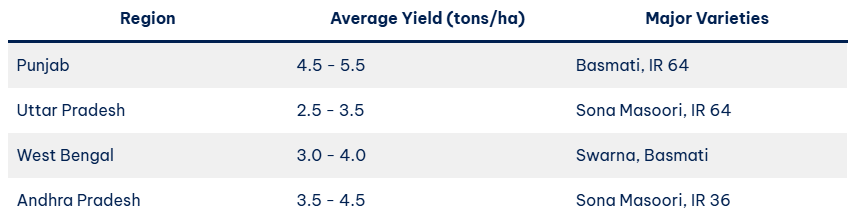
India is the second-largest producer of rice in the world, after China. In the 2023-2024 agricultural year, India’s rice production is estimated to be around 120 million metric tons, with a productivity of 2.8 tons per hectare. States like West Bengal, Uttar Pradesh, and Punjab dominate rice production in India.
Productivity Breakdown by Region:
Trade in Rice
India is not only a leading producer of rice but also one of the largest exporters globally. Indian rice exports have seen a steady increase, primarily driven by the demand for Basmati rice in international markets like the Middle East, Europe, and North America.
- Top Export Destinations: Saudi Arabia, United Arab Emirates, Iraq, and United States.
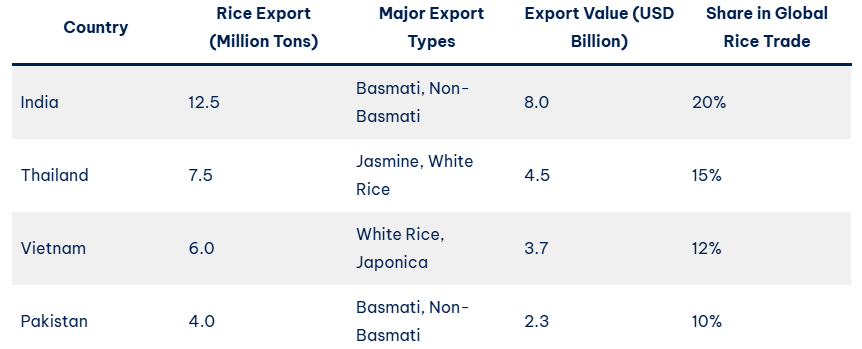
- Export Value: India’s rice export in 2023 was valued at approximately USD 8 billion, with Basmati accounting for more than half of the total rice export value.
System of Rice Intensification (SRI)
The System of Rice Intensification (SRI) is a sustainable and efficient method developed to increase rice productivity while reducing water and input costs. Key features of SRI include:
- Single Seedling Transplantation: Rather than clumping multiple seedlings together, SRI uses only one seedling per hole.
- Wider Plant Spacing: This allows plants to access more nutrients and sunlight.
- Water Management: SRI reduces water use by using intermittent irrigation instead of continuous flooding.
Direct Seeding of Rice
Direct seeding involves sowing pre-germinated rice seeds directly into the soil rather than transplanting seedlings. This method offers several benefits:
- Reduced labor costs (no need for transplanting)
- Faster turnaround times
- Better suitability for mechanized farming
However, it is less effective in managing weed growth and may result in lower yields compared to the traditional transplanting method.
Export Rice from India
India is a major exporter of rice, particularly Basmati, to countries around the world. The export process involves several key steps:
- Preparation and Milling: Rice is harvested, cleaned, milled, and packaged for export.
- Quality Testing: The rice is tested for quality parameters such as aroma, grain length, and moisture content.
- Documentation: Exporters must complete necessary paperwork, including customs declarations and health certifications.
- Shipping: The rice is then shipped via sea freight or air freight to the importing country.
Export Comparison: India vs Other Countries (2024)
Frequently Asked Questions (FAQs)
What is the best season for rice cultivation in India?
- Answer: The best season for rice cultivation in India is the Kharif season, which is from June to October, coinciding with the monsoon. Some rice is also grown during the Rabi season (winter) and Zaid season (summer).
What are the main types of rice grown in India?
- Answer: The main types of rice grown in India are Indica rice (e.g., Basmati, Sona Masoori), Japonica rice, Hybrid rice, and Organic rice.
Which state produces the most rice in India?
- Answer: West Bengal, Uttar Pradesh, and Punjab are the leading rice-producing states in India.
What is the difference between Indica and Japonica rice?
- Answer: Indica rice is grown in tropical regions, has long grains, and is less sticky. Japonica rice is grown in cooler climates, has short grains, and is stickier.
What is Basmati rice?
- Answer: Basmati rice is a long-grain, aromatic variety of rice primarily grown in the Himalayan region and parts of northern India, particularly in Punjab. It is known for its fragrance and long, slender grains.
How much rice is produced annually in India?
- Answer: India produces around 120 million metric tons of rice annually, making it the second-largest producer in the world.
What is the System of Rice Intensification (SRI)?
- Answer: The System of Rice Intensification (SRI) is a method of rice cultivation that focuses on planting fewer seedlings with wider spacing, using less water, and improving soil health. It aims to increase yield and reduce resource consumption.
How do hybrid rice varieties differ from traditional rice?
- Answer: Hybrid rice varieties, such as Pusa Hybrid, are high-yielding and resistant to pests and diseases. They are created by cross-breeding different rice strains, often resulting in better productivity and adaptability compared to traditional varieties.
What is organic rice farming?
- Answer: Organic rice farming is the cultivation of rice without synthetic pesticides or fertilizers. It focuses on using natural methods to control pests and improve soil fertility, and it is increasingly popular due to growing consumer demand for organic products.
Why is Basmati rice so expensive?
- Answer: Basmati rice is expensive due to its long grains, aromatic quality, and labor-intensive cultivation process. It is also in high demand internationally, particularly for export.
What are the climatic requirements for rice cultivation in India?
- Answer: Rice requires a warm climate with temperatures between 25°C to 35°C, along with high humidity and adequate rainfall of about 1,000 to 2,500 mm annually.
Which rice varieties are best suited for export?
- Answer: Basmati rice is the most popular variety for export, particularly to countries in the Middle East, the U.S., and Europe. Other varieties like Sona Masoori and IR 64 are also exported but in smaller quantities.
What is the average yield of rice in India?
- Answer: The average yield of rice in India is around 2.8 tons per hectare, though it varies by region and rice variety.
How does direct seeding differ from transplanting in rice farming?
- Answer: Direct seeding involves sowing rice seeds directly into the field, while transplanting involves growing rice seedlings in a nursery and then moving them to the field. Direct seeding requires less labor, but transplanting generally leads to higher yields.
What are the advantages of using the System of Rice Intensification (SRI)?
- Answer: The advantages of SRI include reduced water usage, increased yields, lower seed requirements, and better soil health. It also promotes sustainable farming practices and reduces input costs.
How is rice harvested?
- Answer: Rice is typically harvested by cutting the mature plants with sickles or mechanical harvesters. Afterward, the grains are separated from the stalks using threshers, and they are dried to reduce moisture content before milling.
Can rice be grown without flooding the fields?
- Answer: Yes, rice can be grown without continuous flooding, especially using methods like direct seeding or the System of Rice Intensification (SRI), which focus on less water-intensive cultivation techniques.
How can farmers increase rice yield?
- Answer: Farmers can increase rice yield by adopting advanced techniques like SRI, using high-yielding hybrid varieties, proper irrigation management, integrated pest management, and applying fertilizers based on soil tests.
What is the role of irrigation in rice farming?
- Answer: Irrigation plays a crucial role in rice farming, especially in the Kharif season, where consistent water supply is needed for optimal growth. Flood irrigation is traditionally used, but more efficient methods like drip irrigation and aerobic rice farming are gaining popularity.
How can rice cultivation be made more sustainable?
- Answer: Sustainable rice cultivation can be achieved by adopting practices like organic farming, water-efficient techniques (e.g., SRI), reducing pesticide use, recycling crop residues, and promoting agro-ecological farming systems that maintain soil health and biodiversity.